
Reading time: ~9 minutes
By the end of this article, you will understand:
- what psychosomatic symptoms really are,
- why they are not «in your head»,
- why your body might hurt even when you don't feel anything out of the ordinary,
- how to tell when a medical check-up is needed,
- and how psychotherapy helps.
You went to a doctor. You had tests done, perhaps you even got a second opinion. Everything came back clear. Yet, the pain you have been feeling for a long time remains in your stomach, your head, your muscles, your back. Someone might have even told you «it's all in your head», meaning that what you are feeling is not real. But that is not how it is.
What are psychosomatic symptoms?;
These are physical symptoms that have a real, biological basis, but their cause or worsening is closely linked to psychological stress.
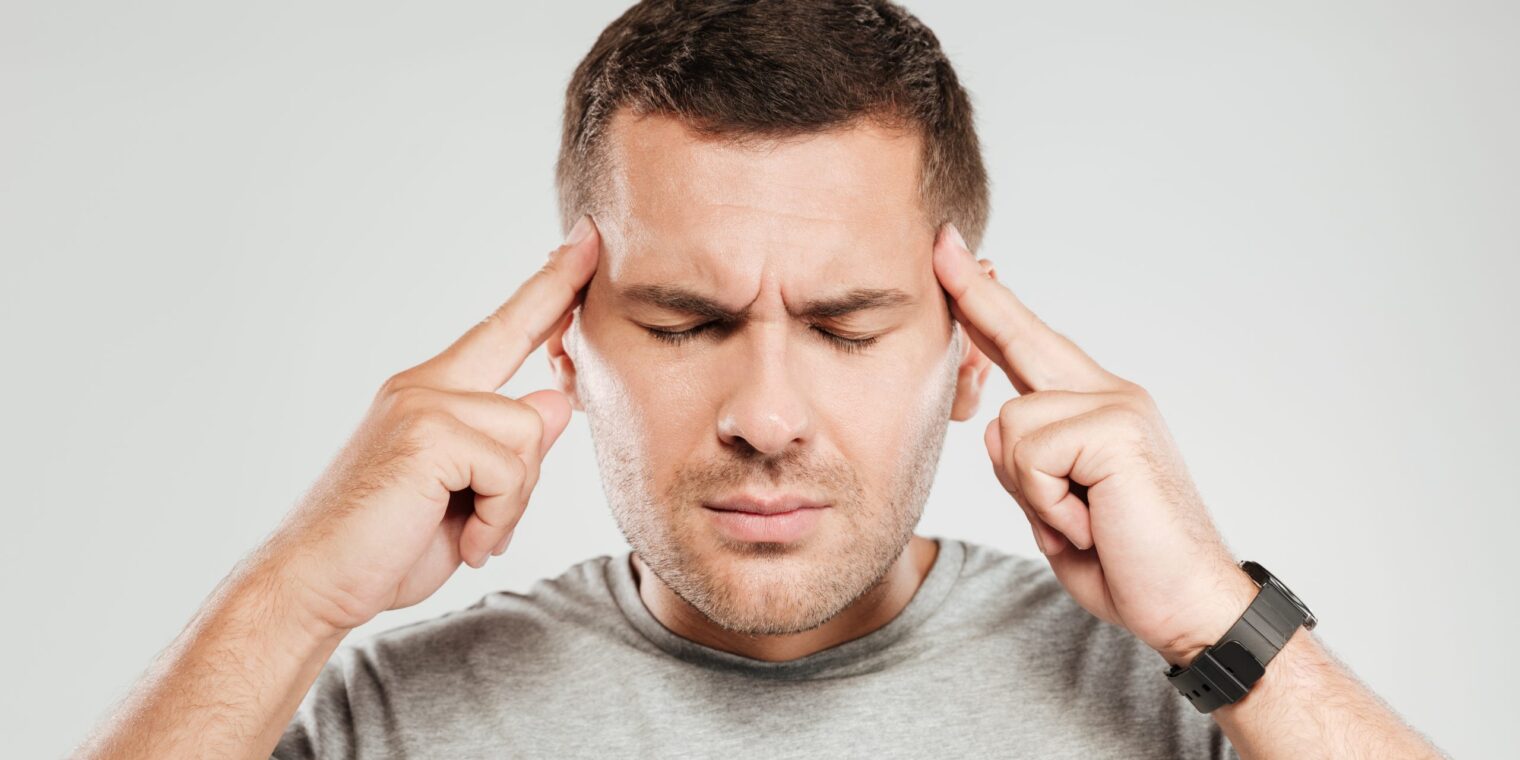
Headaches, stomach disorders, muscle tensions, fatigue, insomnia, all of these can appear without a clear organic cause, not because «you are imagining them», but because your body is expressing something that has not yet found another outlet.
Is it «in my head», or is it real?;
It is completely real. Chronic stress measurably changes the function of your body.
Stress is not just a «state of mind». When it becomes chronic, it disrupts the body's hormonal axis (the so-called HPA axis), with effects that extend to inflammation, the immune system, and even the cardiovascular system. It is not a matter of having a «weak character», but biology that responds to what you are experiencing.
If you are interested in this topic in depth, we explain it more extensively in our review of The Body Keeps the Score, a landmark book right on this relationship between body and trauma.
Why do I not feel any particular emotion, but my body is reacting?;
Why you might find it difficult to recognise and name what you are feeling, something science calls alexithymia.
Let us imagine a scene from a psychotherapy session (with fictional elements, for reasons of confidentiality, but very common):
a client has been suffering from chronic headaches and stomach discomfort for months. When asked how he feels, he replies «fine, I have no reason to be upset». In therapy, however, something different slowly emerges: a job that exhausts him without him admitting it, a relationship where he always feels he is compromising. And then we realise that his «no «reason» to be upset» was simply «had never learned to recognise when they are feeling upset».
The concept of alexithymia was originally described precisely in people with psychosomatic symptoms: a difficulty in recognising and describing their own emotions. Recent research in psychosomatic clinic patients confirms how central this mechanism is: the difficulty in recognising emotions acts as a «bridge» between difficult life experiences and physical symptoms. In other words, the body speaks when the mind cannot find or does not allow itself to find words.

How do I tell if something is psychosomatic or purely medical?;
You cannot tell on your own.
No psychosomatic symptom is investigated as such until an organic cause has been ruled out by a specialist.
This is not a detail, it is a prerequisite. Only after a doctor confirms that there is no medically apparent cause does it make sense to explore the psychological component and often, even when there is an organic cause, stress can concurrently exacerbate the symptoms.
When do I need to seek professional support;
When the body begins to speak through psychosomatic symptoms, such as persistent headaches, tightness in the chest, stomach disorders or chronic fatigue without a clear organic cause, we often tend to downplay them or wait until we can «endure» even more. However, you do not need to «prove» to anyone that your pain is severe enough to ask for help.
The right time to seek professional support is precisely the moment you decide to take your pain seriously, exactly as you feel it, recognising that this physical discomfort constitutes a valuable message asking for care, relief and understanding.
How does psychotherapy help?;
By helping you recognise and process what your body is already expressing, instead of carrying it all alone.
Psychotherapy does not automatically «erase» symptoms like a switch. It gives space and words to what the body has been trying to say on its own. This is essentially the very systemic perspective that guides all our work at Reconnect Therapy: the symptom is not a «malfunction» to be eliminated, it is information. If you recognise in yourself a tendency to «ruminate» on difficult thoughts without getting anywhere—something that often accompanies psychosomatic symptoms as well—we discuss this pattern in more detail in our article «Why overthinking exhausts you so much».
In short
Psychosomatic symptoms are real, biological pain closely linked to psychological stress, not «just in your head». Chronic stress measurably alters how the body functions, and the difficulty in recognising emotions (alexithymia) often acts as a bridge between difficult experiences and physical symptoms. Always a medical check-up first; psychotherapy helps by giving words to what the body is already expressing.
Frequently asked questions
What are the most common psychosomatic symptoms?; Headaches, stomach upsets, muscle tension, fatigue, insomnia.
Do they affect certain groups of people more?; Yes, they are more common in women, teenagers, and individuals going through periods of increased stress.
Is a medical check-up required first?; Yes, always before any psychological investigation.
Does psychosomatic mean that «I'm imagining it»?; No, the pain is entirely real; it's simply that the cause is linked to psychological factors.
Can symptoms «disappear» through psychotherapy alone, without medication?; In many cases yes, but it always depends on the severity and individual assessment.
If you continue to experience pain even though your test results are clear, get in touch with us here so that we can figure out together what is really causing your pain.
Read also:
- It is not just your fault. Because in systemic psychotherapy, the “I” is always explained through the “we”.
- Anxiety: 4 Mental Traps & How to Find Your Calm

I would love to read your message… I make sure to read all messages and reply to as many as I can.
The article is based on the science of psychology and the clinical experience of psychotherapists. It has a psychoeducational character and does not replace psychotherapy, medical or psychiatric evaluation, nor can it cover the uniqueness of every relationship and every lived experience. If you are experiencing intense mental distress, dysregulation, violence, coercion or the feeling that you are not a safe person within your relationship, it is important to seek personalised professional support.
Artificial intelligence may be used supportively in the process of researching, organising and cross-referencing contemporary literature. However, the final text, ideas, clinical judgement, language and responsibility for publication belong to us. Every article is written and edited with human thought, clinical experience and respect for the person reading it.
Written by: Philippos Gkekis, Psychologist Psychotherapist, creator of ReConnect Therapy along with the scientific team of ReConnect Therapy.
References
Chen, J., Ma, D., Cao, J., & Wei, J. (2026). Alexithymia mediates the pathway from negative life events to somatic symptoms: A cross-sectional study in a psychosomatic outpatient sample. Frontiers in Psychiatry, 16, 1680463.
Cohen, S., Janicki-Deverts, D., & Miller, G. E. (2007). Psychological stress and disease. JAMA, 298(14), 1685–1687.
Sifneos, P. E. (1973). The prevalence of “alexithymic” characteristics in psychosomatic patients. Psychotherapy and Psychosomatics, 21(2), 133–136.